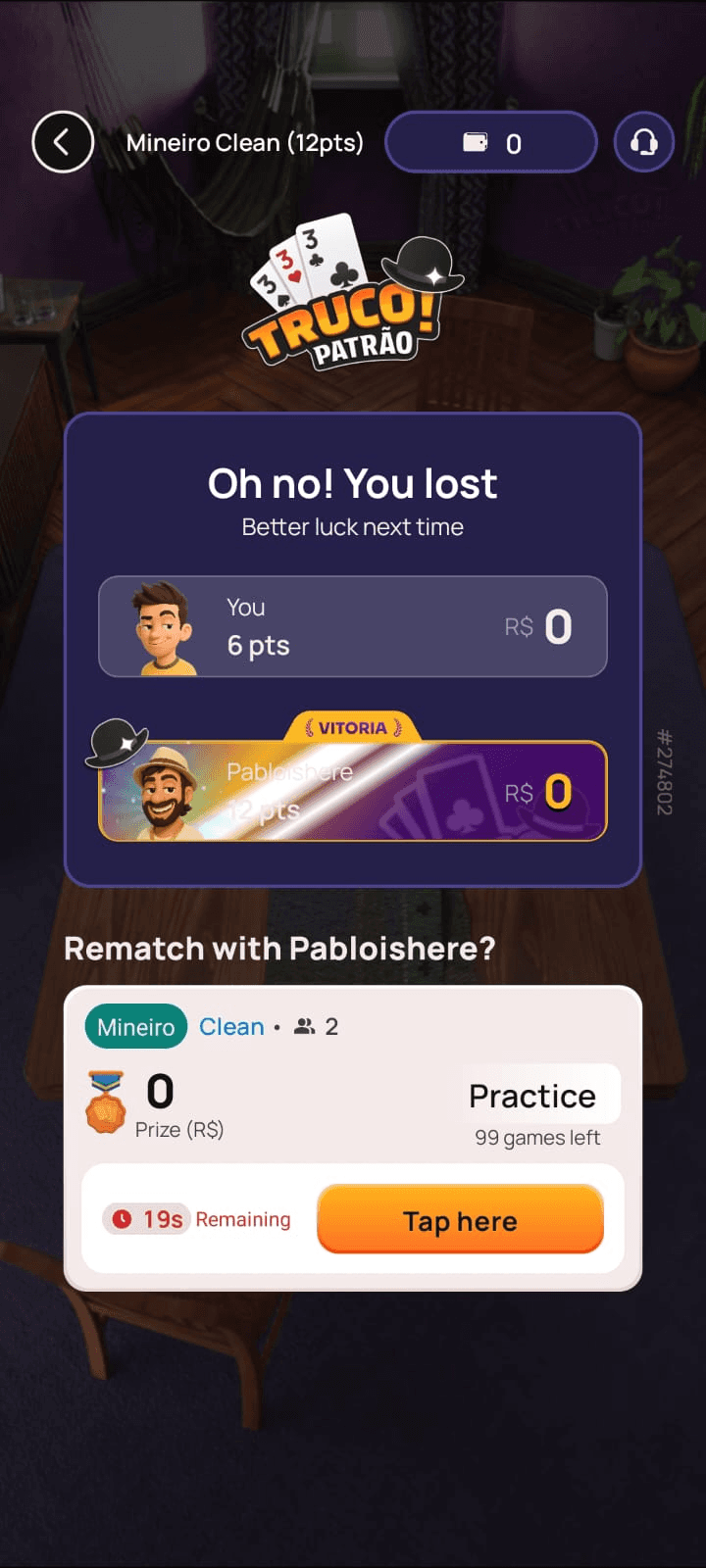
Truco Patrão
Multiplayer Gameplay Systems Design
Designed core gameplay systems for a real-time multiplayer card game, translating traditional rules into scalable digital mechanics for up to 10 players.
Role: Game Systems Designer
Company: Gameskraft
Scope: Gameplay Systems, Multiplayer Flow, Interaction Design
Truco Patrão is a multiplayer adaptation of the Brazilian card game Truco, focused on bluffing, risk, and social play.
I worked on translating traditional mechanics into digital systems, including round-state logic, betting flows, and multiplayer turn progression, ensuring clarity and scalability for real-time sessions.
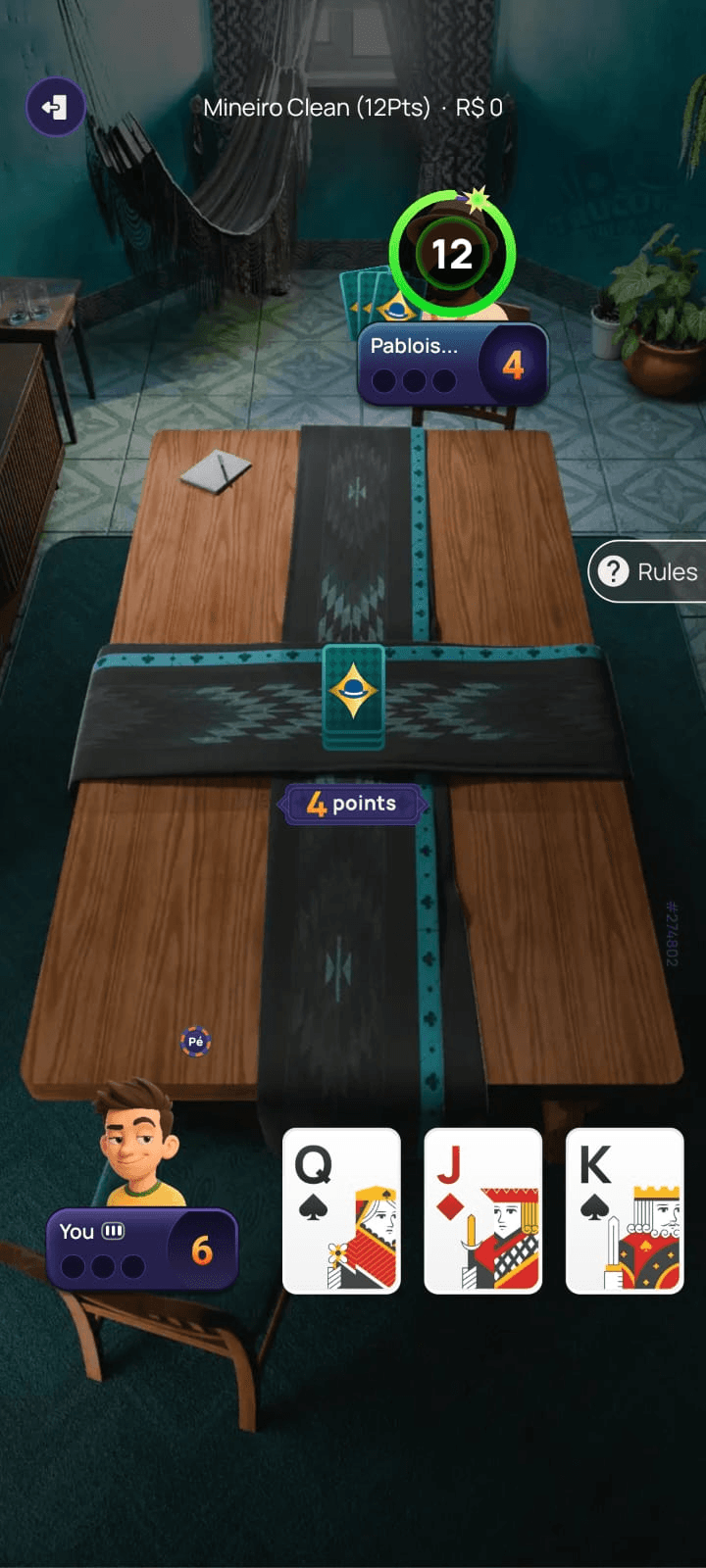

Core Gameplay
Key moments revolve around:
Bluffing and Counter-Bluffing: Players can raise stakes through “Truco” and “Patrão” calls, forcing opponents into risk-based decisions.
Calling “Truco” and “Patrão” : Structured turn progression with clear phases for play, raise, and resolution.
Multiplayer Flow: Supports multiple players with synchronized decisions and real-time updates.
Balancing risk and reward: Players must balance aggressive betting with probability and opponent behaviour.
Every round demands both skill and intuition , one bold call can win the match, or cost everything.
MY CONTRIBUTION
• Designed round-state system governing turn flow and match progression
• Built bluffing and raise mechanics translating real-world calls into UI flows
• Structured multiplayer interactions for sessions up to 10 players
• Prototyped gameplay flows to validate clarity and pacing
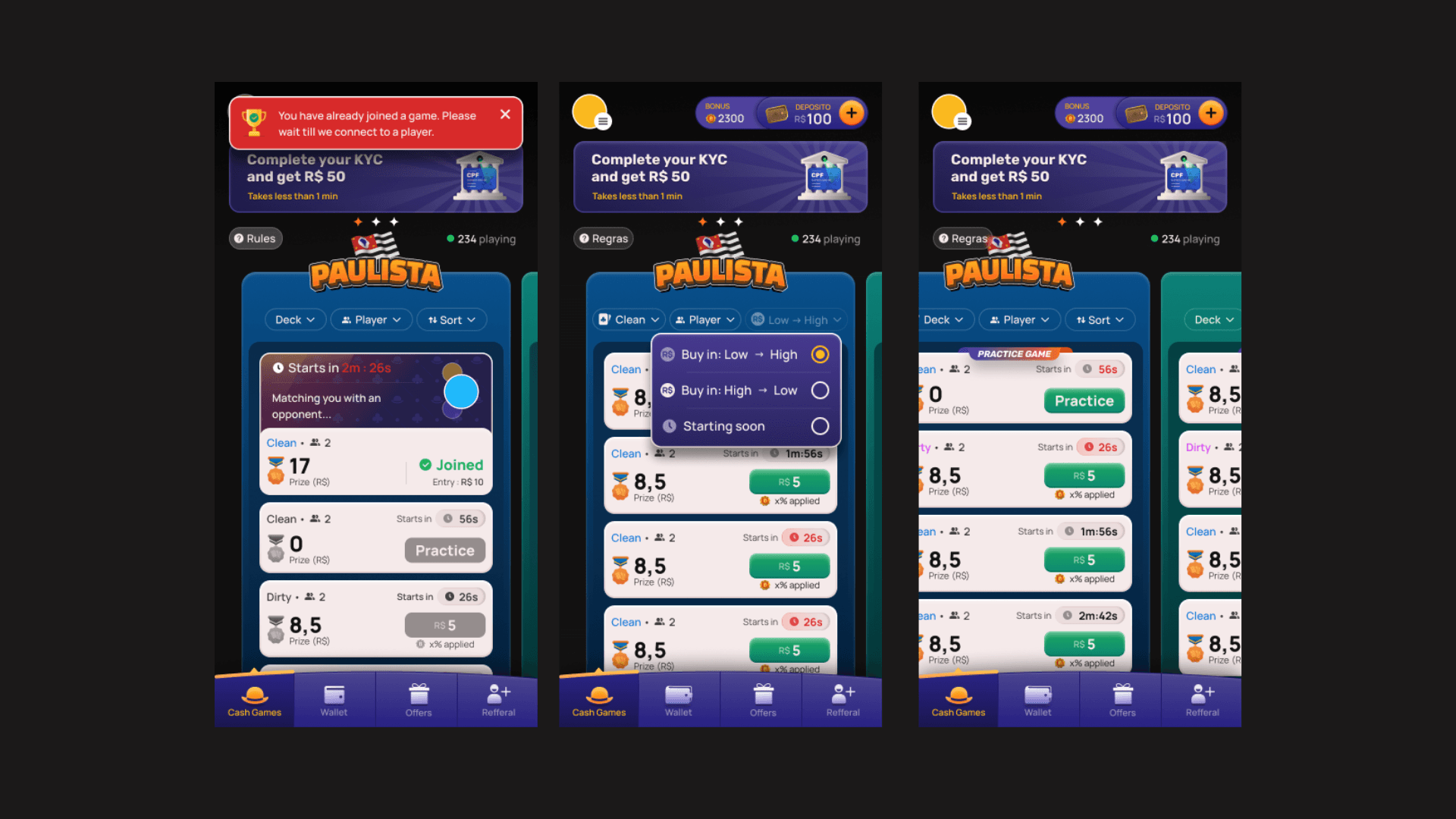
Tournament System Design
I designed a hybrid tournament system for Truco Patrão that balances fairness for new players with competitive depth for experienced players, while maintaining short session cycles (3–5 minutes).
Problem
Standard elimination formats created early drop-offs and unfair matchups, especially for new players entering competitive play.
Solution
Designed a multi-stage tournament system combining leniency, filtering, and high-stakes endgame progression:
Bracket & Progression Logic
Players could continue in the bracket even after losses, with up to 3 losses allowed. This reduced early elimination frustration and improved onboarding for new players., Structured scalable tournament flows to support large player pools while maintaining match pacing and competitive balance.Reward & Leader board Systems
Designed reward distribution and leader board progression aligned with player engagement patterns to encourage repeat participation.Tournament Identity
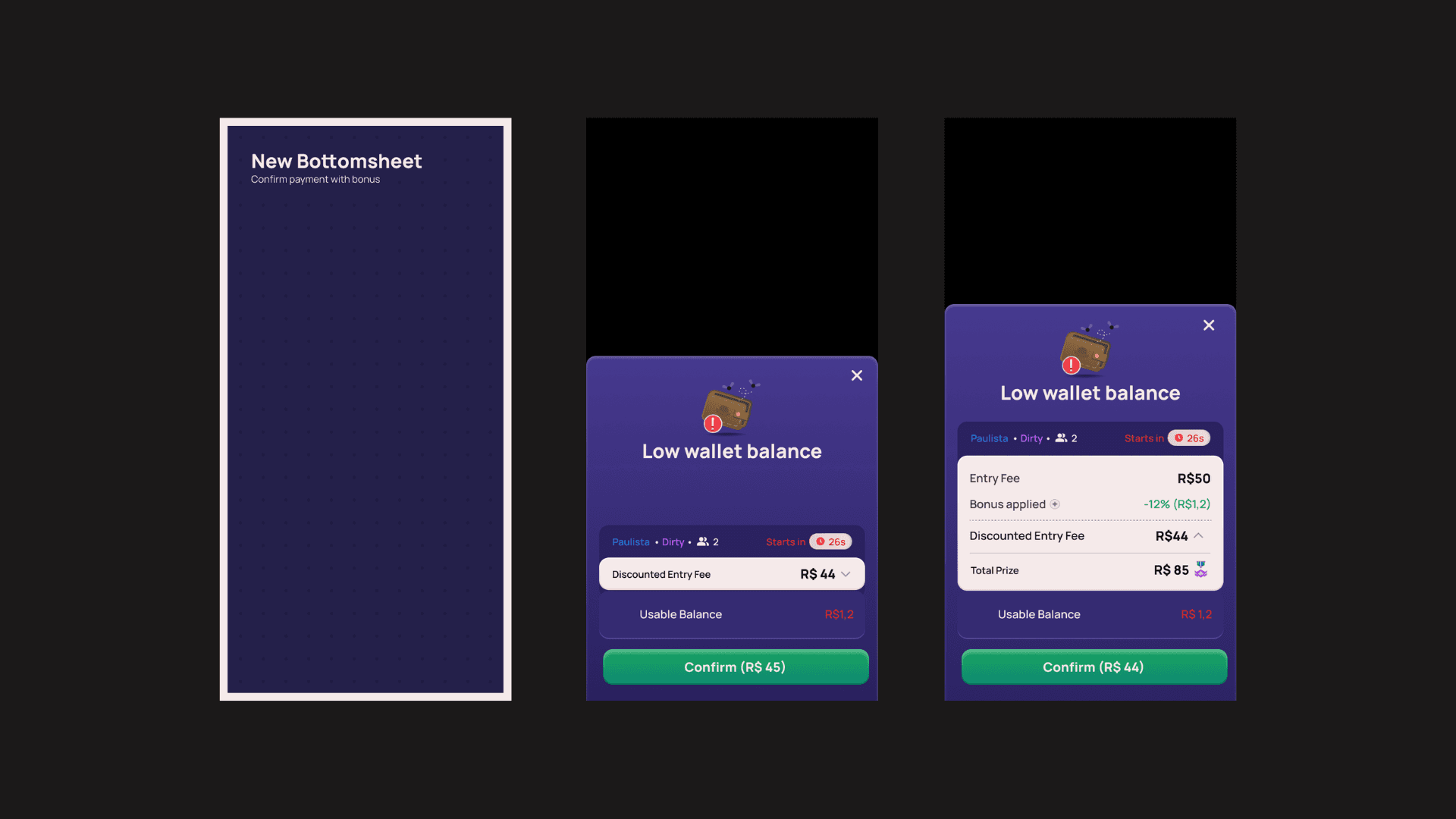
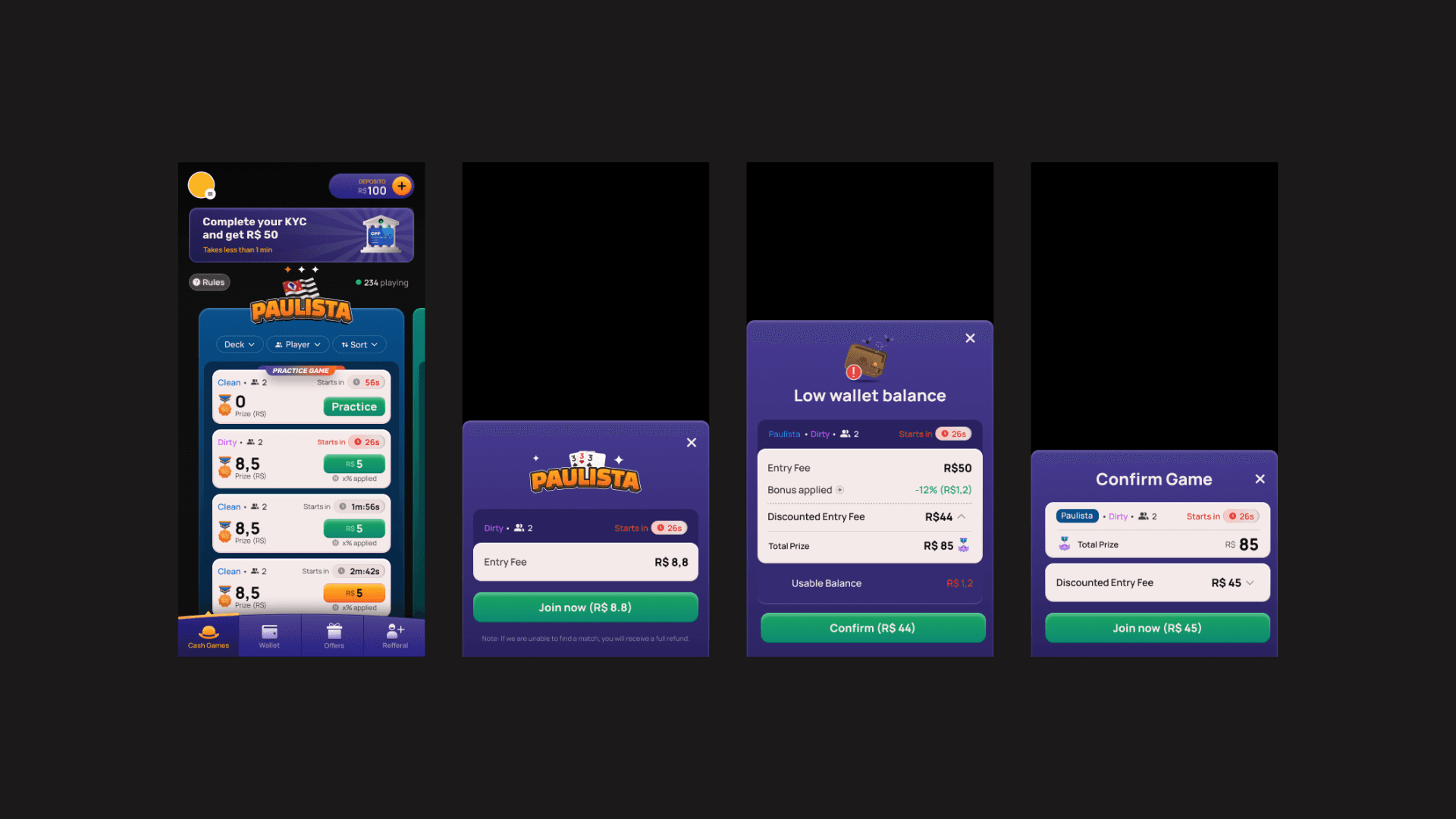
Defined the “Patrão” persona through naming, tone, and escalation reinforcing authority, prestige, and psychological pressure across rounds. Designed a pooled reward system where total entry fees were redistributed based on rank, creating a strong risk–reward loop tied to performance.UX Flow & Continuity
Mapped end-to-end player journeys (lobby → match → results) to ensure smooth transitions between casual and competitive modes.Players were required to complete a defined number of matches within a time window to advance, ensuring pacing and tournament momentum. Entry fees were refunded if participation conditions were not met.
Matchmaking System (Proposed)
Proposed a hybrid matchmaking approach combining Elo and Glicko to balance fairness for new players with competitive accuracy for experienced players.
Iterations
Refined tournament structure, win/loss thresholds, and progression pacing based on player behaviour and engagement patterns.
Outcome
• Improved early retention by reducing harsh eliminations
• Maintained engagement across tournament progression with lower mid-stage drop-off
• Enabled scalable competitive play aligned with short session lengths
• Established a flexible system suitable for future live-ops events