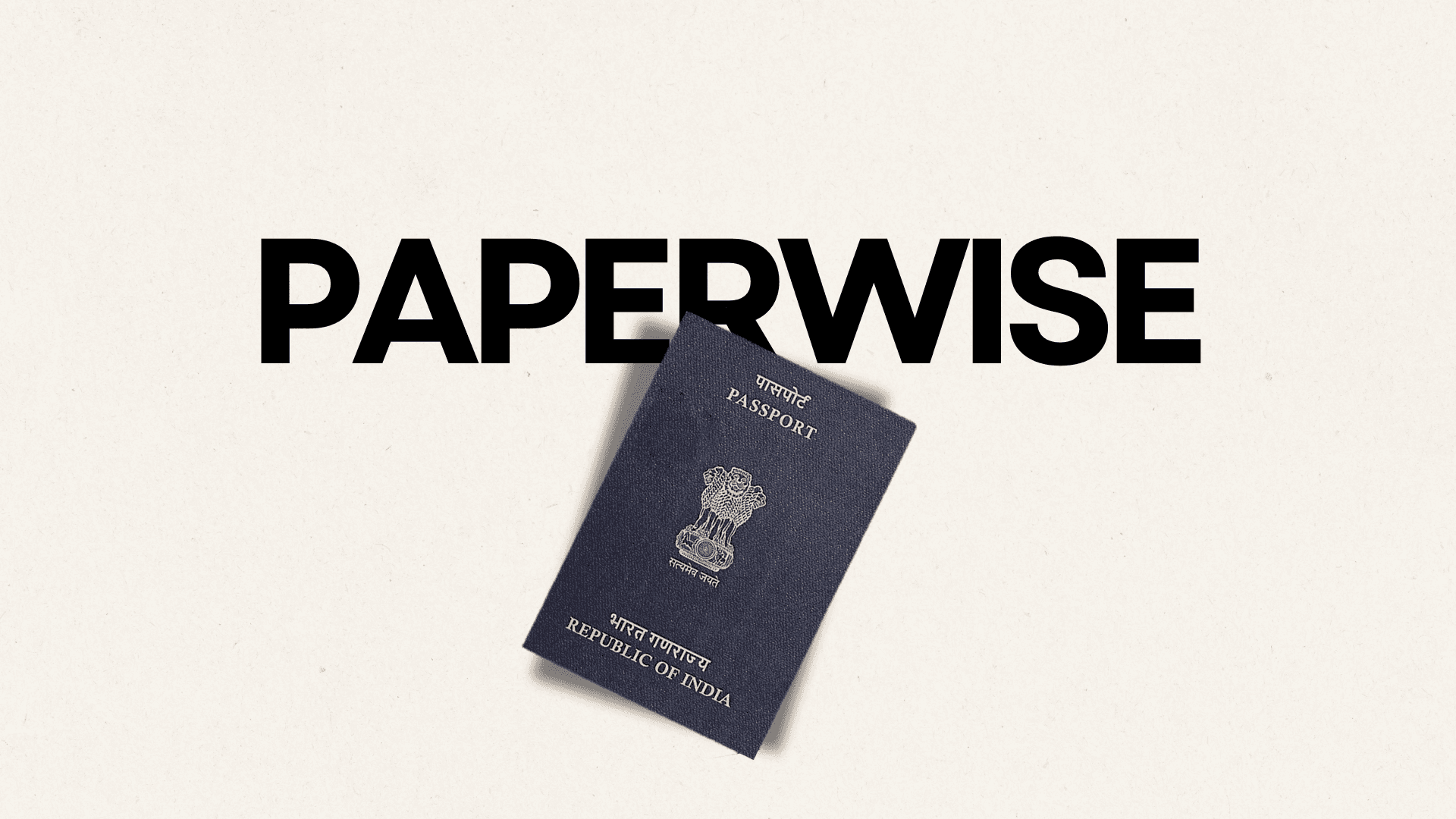
Paperwise : A Systemic Simulation of Bureaucratic Friction
Designed a serious game that simulates navigating bureaucratic systems through interactive document handling and decision-making.
Paperwise is a 2D interactive experience that recreates the process of applying for a passport, transforming a complex real-world system into an exploratory gameplay loop.
The project focuses on making bureaucratic processes understandable by simulating real-world constraints, errors, and decision points.
My Contribution
• Designed core gameplay loop and interaction systems
• Conducted research on real-world passport application challenges
• Translated procedural workflows into interactive systems
• Designed UI/UX and interaction logic for document handling
• Built a complete experience within a 2-week timeline
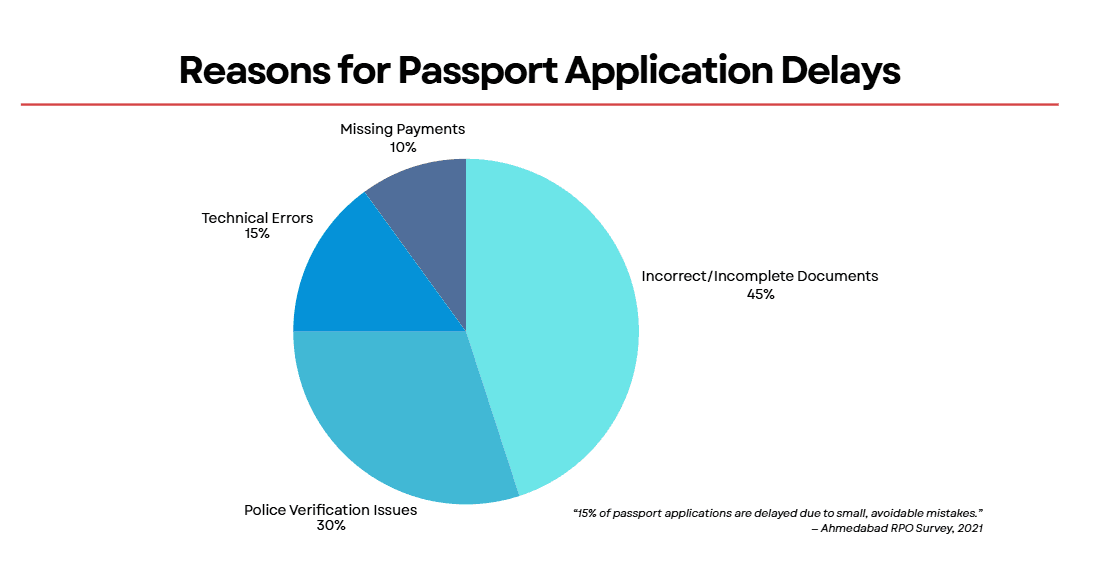
Problem: Bureaucratic Systems Are Opaque and Error-Prone
Users often struggle with processes like passport applications due to:
• Low digital literacy and lack of guidance
• Documentation errors (mismatched details, missing fields)
• Complex workflows and unclear requirements
• Limited accessibility and support
Result: High friction, repeated errors, and lack of user confidence.
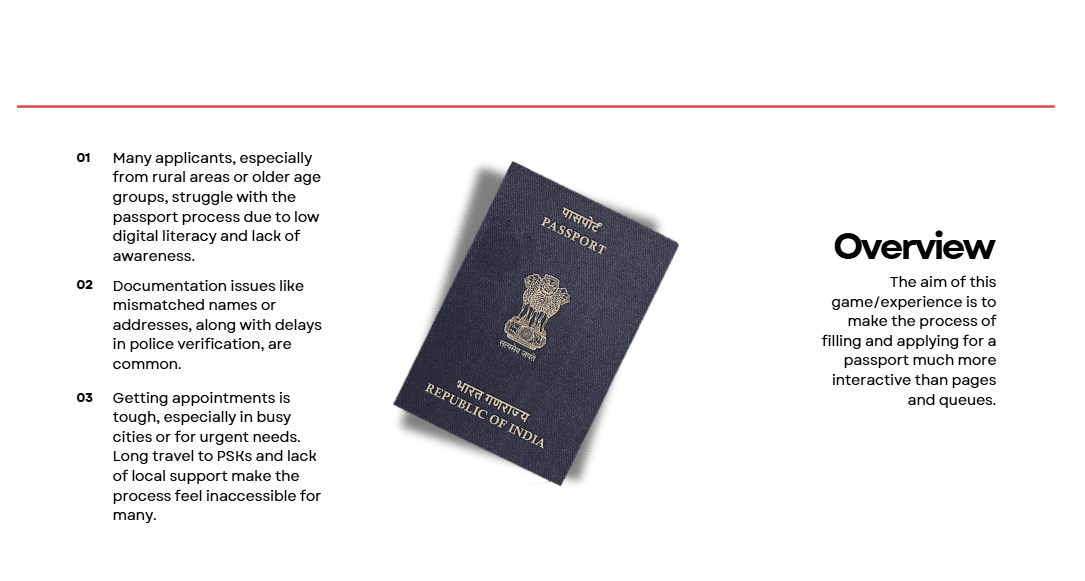
Core System: Bureaucratic Simulation Through Interaction
Designed a system where players learn by navigating constraints instead of being instructed directly:
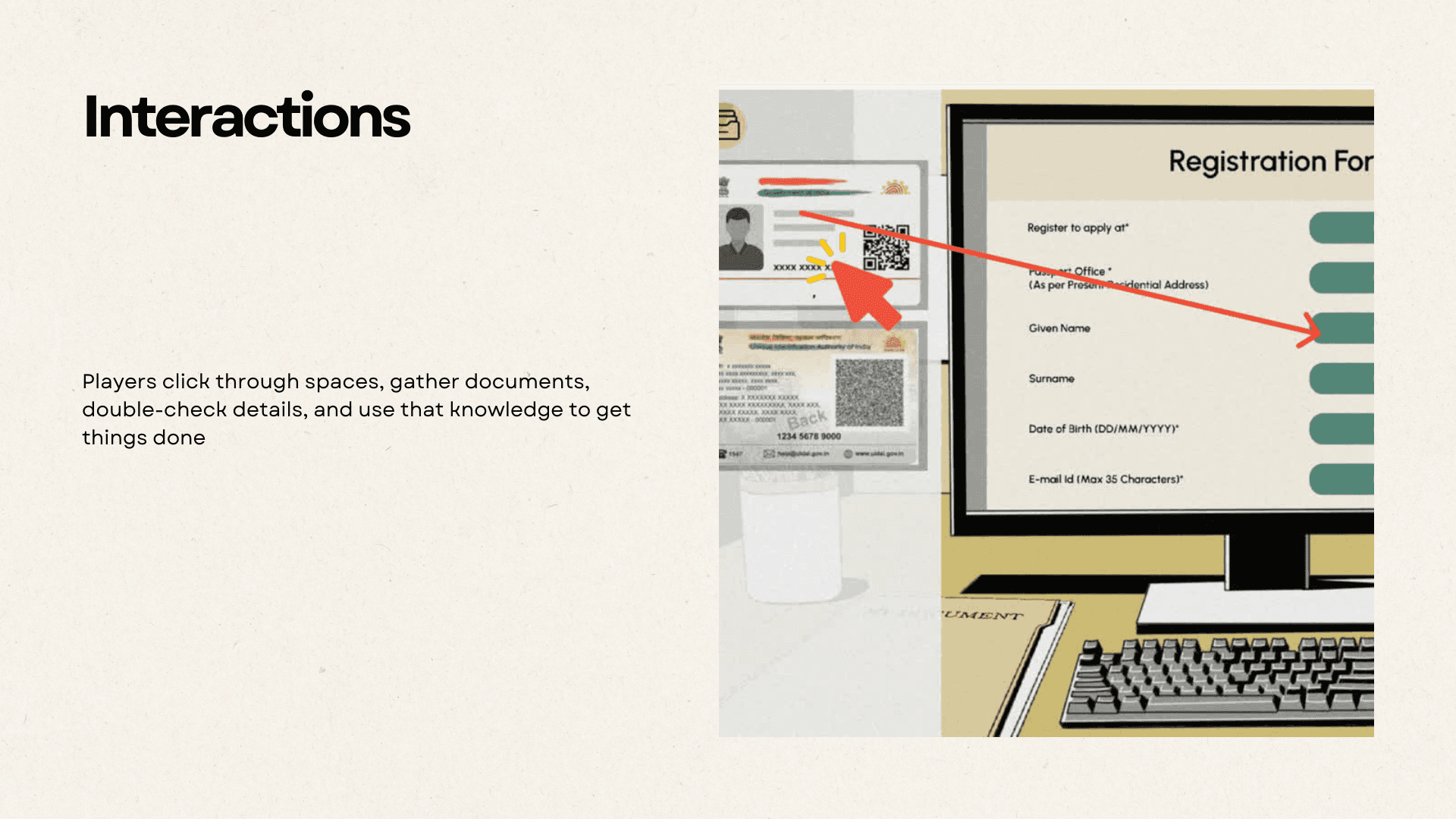
• Document Discovery - Players explore environments to find required documents.
• Validation & Verification - Players assess document correctness (name, address, format).
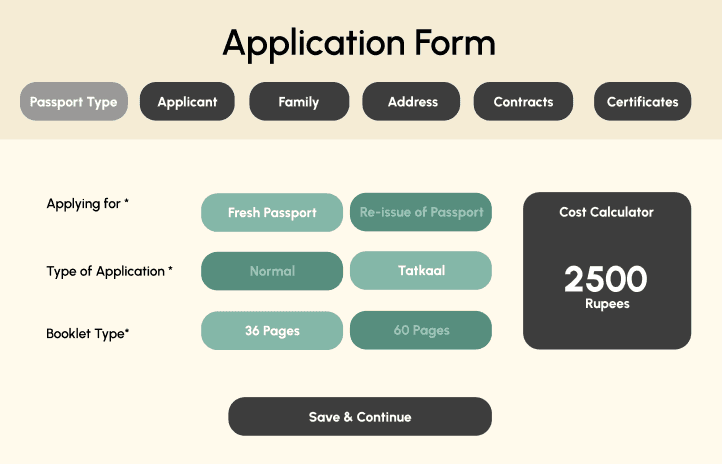
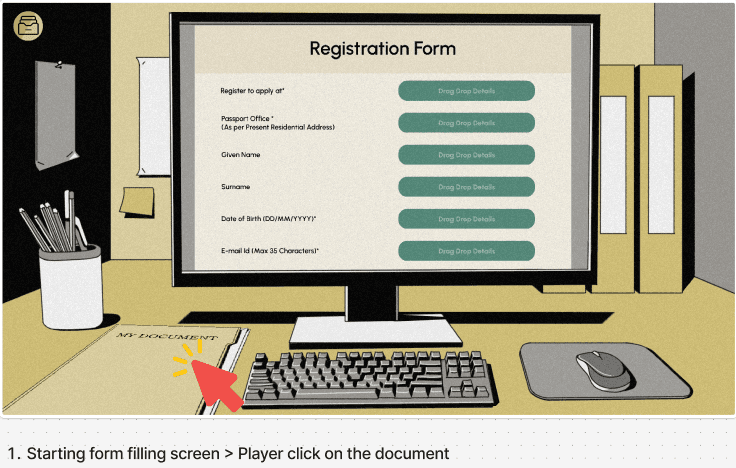
• Form Completion - Information must be transferred accurately across systems.
• Error Feedback - Incorrect submissions create friction, simulating real-world consequences.
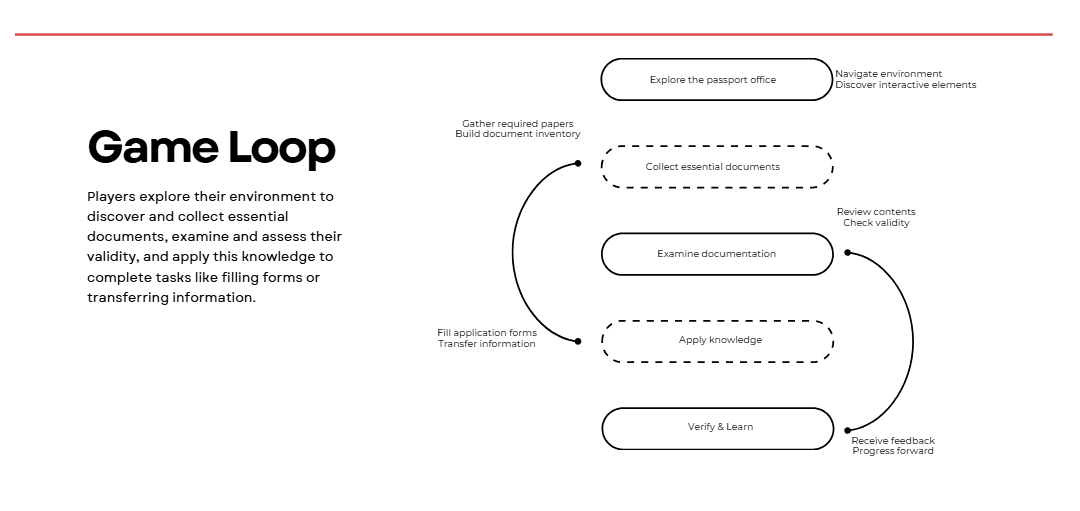
Gameplay Loop
Explore → Collect Documents → Validate → Fill Forms → Submit → Receive Feedback
The loop emphasizes learning through trial, error, and correction rather than guided instruction.
Interaction Design
• Point-and-click navigation in a 2D space
• Interactive hotspots for discovery and engagement
• Single-click for interaction, double-click for detailed inspection
• Tactile UI inspired by physical paperwork to reinforce familiarity
Design Intent
The goal was not to simplify the system, but to simulate its friction—allowing players to understand bureaucratic complexity through interaction.
By engaging with errors, delays, and constraints, players build procedural knowledge and confidence.
Visual Design
• Paper-textured 2D aesthetic inspired by bureaucratic environments
• Minimalist layout to reduce cognitive overload
• Bold visual cues to guide interaction and highlight critical actions
Outcome
• Translated a real-world bureaucratic system into an interactive experience
• Enabled learning through simulation rather than instruction
• Reduced perceived complexity by making processes explorable
• Built a complete serious game prototype within a short production timeline