Project details

LiveOps and System Design of Kalpa - For Studio Sirah

The game

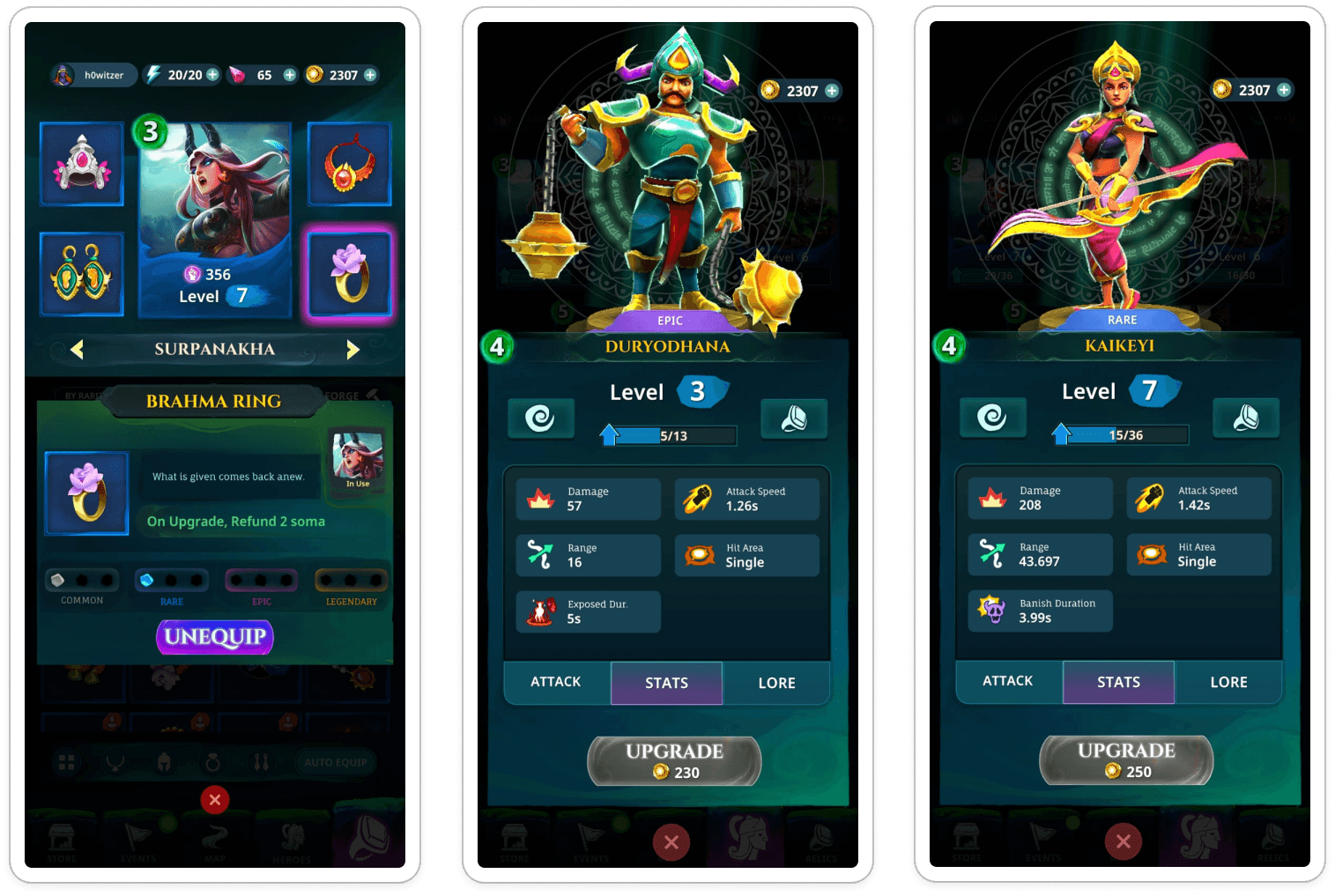
Inspired by Indian mythology, Kalpa is a portrait-mode tower defence game (Ramayana/Mahabharata). Players use legendary heroes to fend off waves of Asura enemies in order to protect the holy Kalpa tree, the final stronghold of creation.

Core Loop: 3–5 minute defence sessions in which players control rising deployment costs, strategically deploy heroes using Soma (an energy resource), and unlock divine Boons to bolster their defence.

Target Market: Mid-core mobile gamers looking for aesthetically pleasing visuals, cultural authenticity, and strategic depth.

Present Situation: Early Access (March 2026), ~Level 32 content accessible in more than two worlds.

MY PART

I had to create a mid-game progression system that unlocks after World 2 (~Level 32+) as part of a design exercise in order to address player engagement concerns without overwhelming them.

Limitations: No new adversaries or heroes
No complete redesign for monetisation
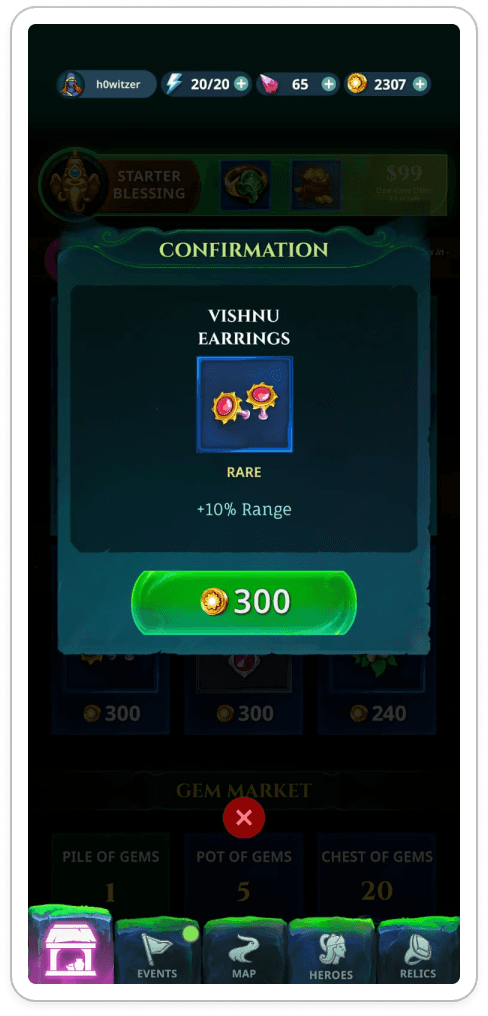
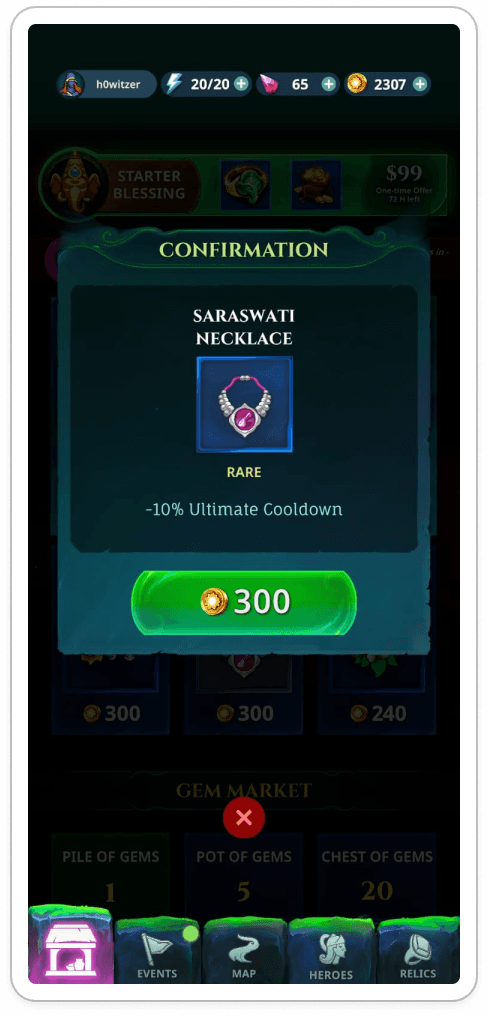
Integration with current systems (Boons, Relics, Heroes) is required.
Design with mobile in mind (3-5 min sessions)

IDENTIFYING THE MID-GAME BOTTLENECK

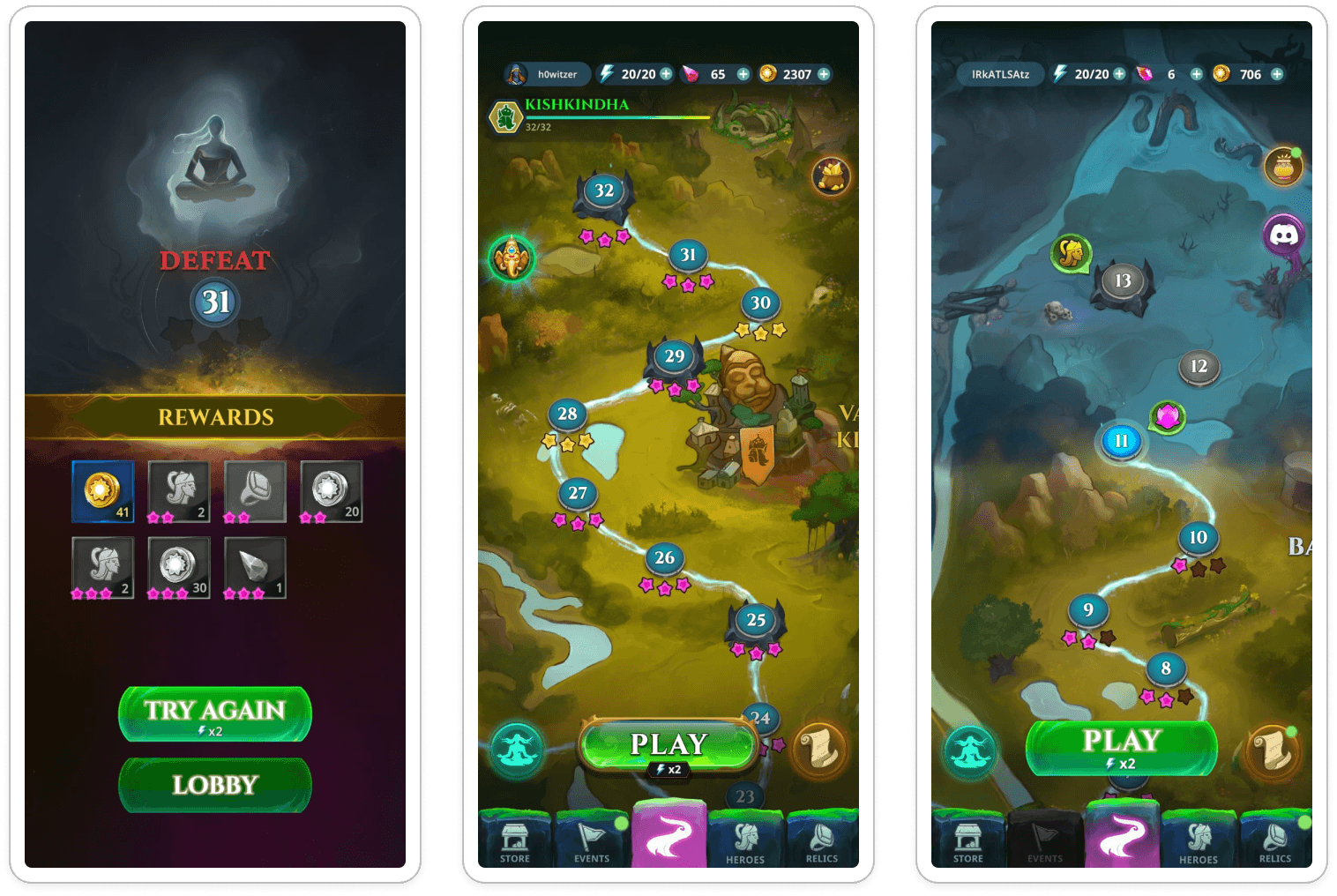
Through gameplay analysis (Levels 1-22) and player journey mapping, I found a significant progression dead zone at Level 32 and above:

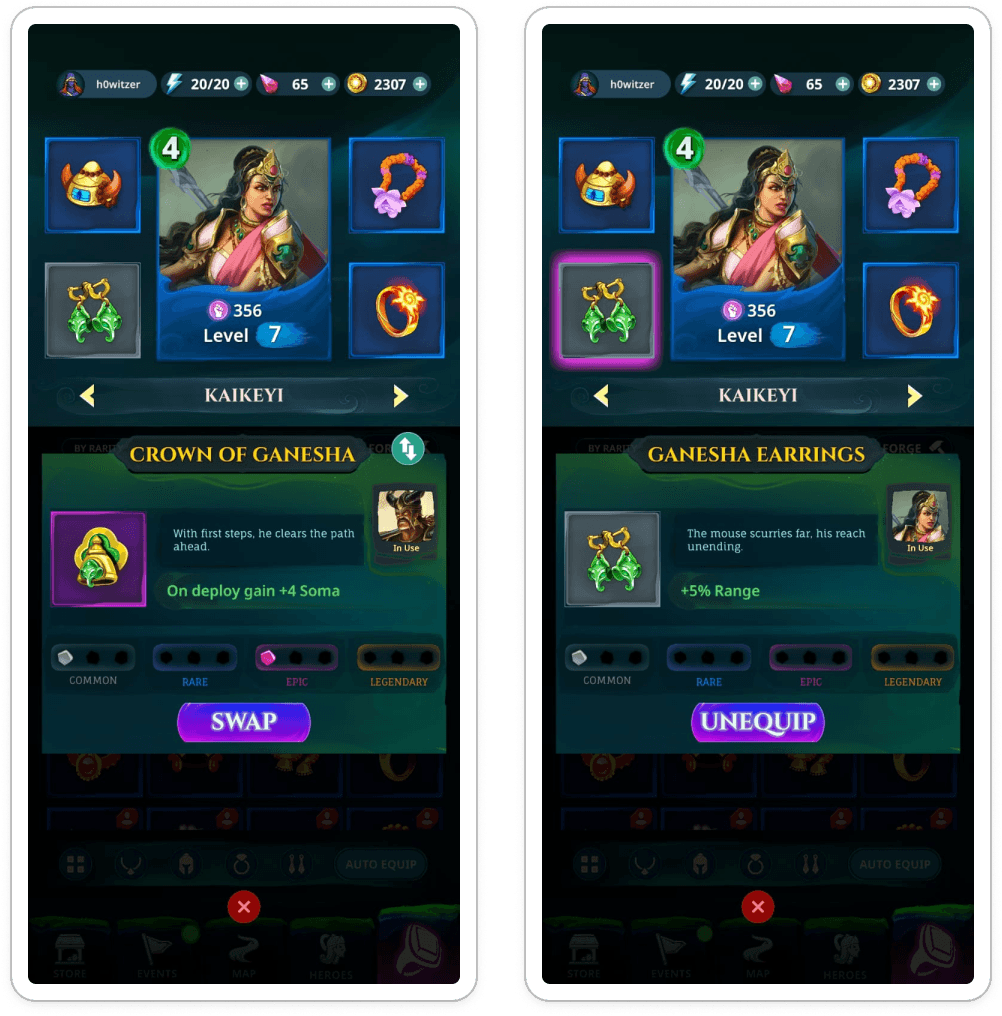
  1. Shallow Items (90% Drop Waste Rate)
    • Current relics provide only flat stat bonuses (+6% damage, +8% against bosses)
    • No synergies, no build identity, and no strategic choices
    • Players ignore 90% of drops because they offer no new utility
    • The "Auto-Equip" button exists because even developers realize players don't care

  2. Dead Content
    • Players need hero cards to progress (15 or more cards per upgrade)
    • Completing 3-starred levels gives no rewards on replay
    • Early game (Levels 1-20) becomes wasted content
    • This creates a "can't progress forward, can't grind backward" trap

  3. Difficulty Spike
    • Level 22 (Duryodhan boss) poses a massive difficulty wall
    • Swarm-heavy encounters overwhelm standard hero stats
    • Increasing Soma costs (deployment cost plus one per redeployment) make fights feel punishing
    • Losses feel "mathematical" instead of skill-based

  4. Repetitive Gameplay
    • Same strategies are used in every replay
    • No variety in objectives or modifiers
    • Hero archetypes are inflexible (can’t adapt builds for each level)
    • Limited long-term goals beyond linear level progression

PLAYER IMPACT

This bottleneck creates a retention cliff where engaged players face a wall:

  • They can't beat new levels without upgrades

  • They can't efficiently farm for upgrades (dead content)

  • Replaying becomes unrewarding (no variety, no drops)

  • As a result, players quit during the mid-game grind phase

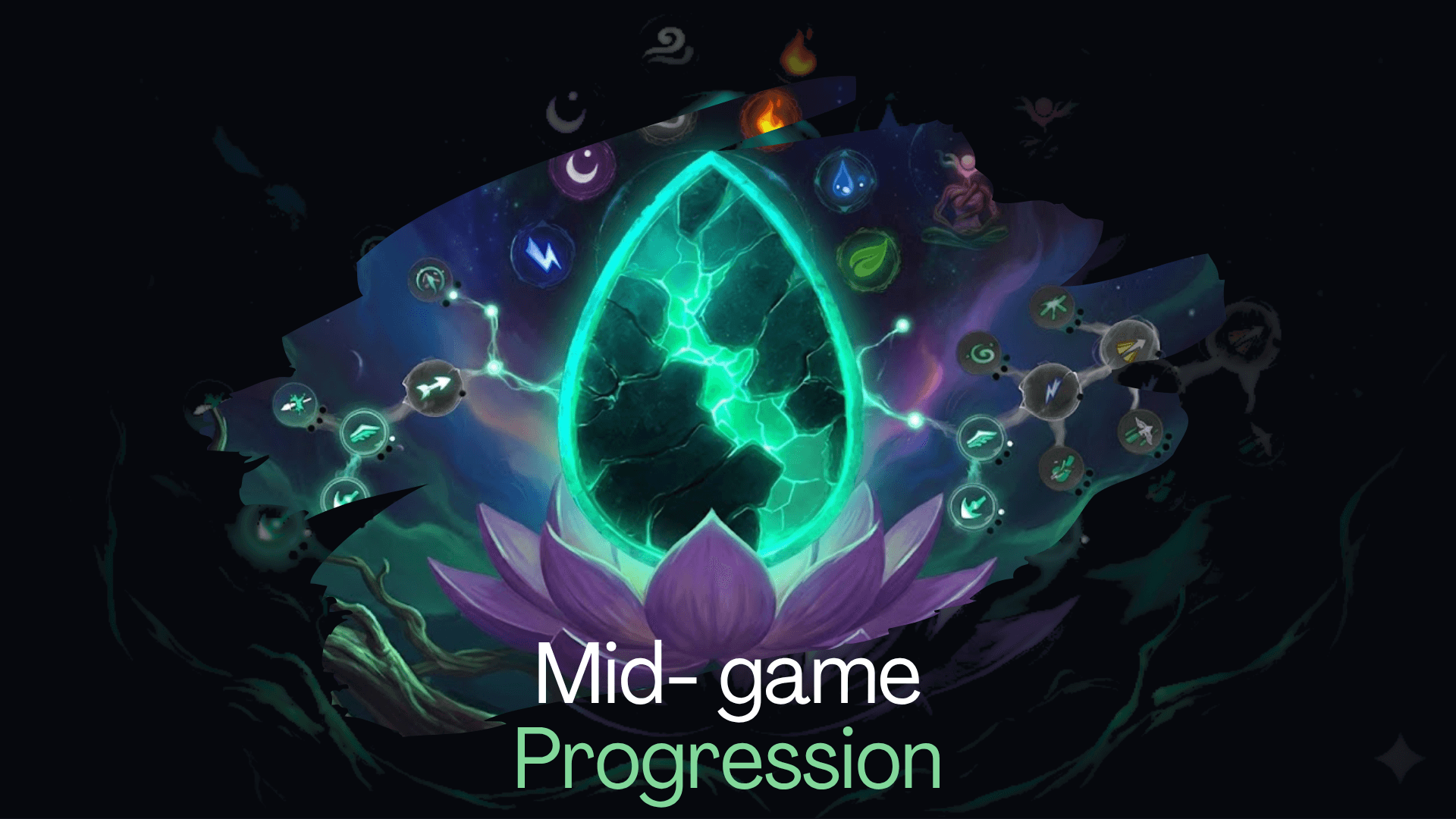
THE KALPA TREE: SYSTEM & ECONOMY DESIGN

1. Global Board Presence (Solving Mobile UI Friction)

  • Problem: Managing individual gear for 5+ heroes causes severe menu fatigue and cognitive overload on mobile screens.

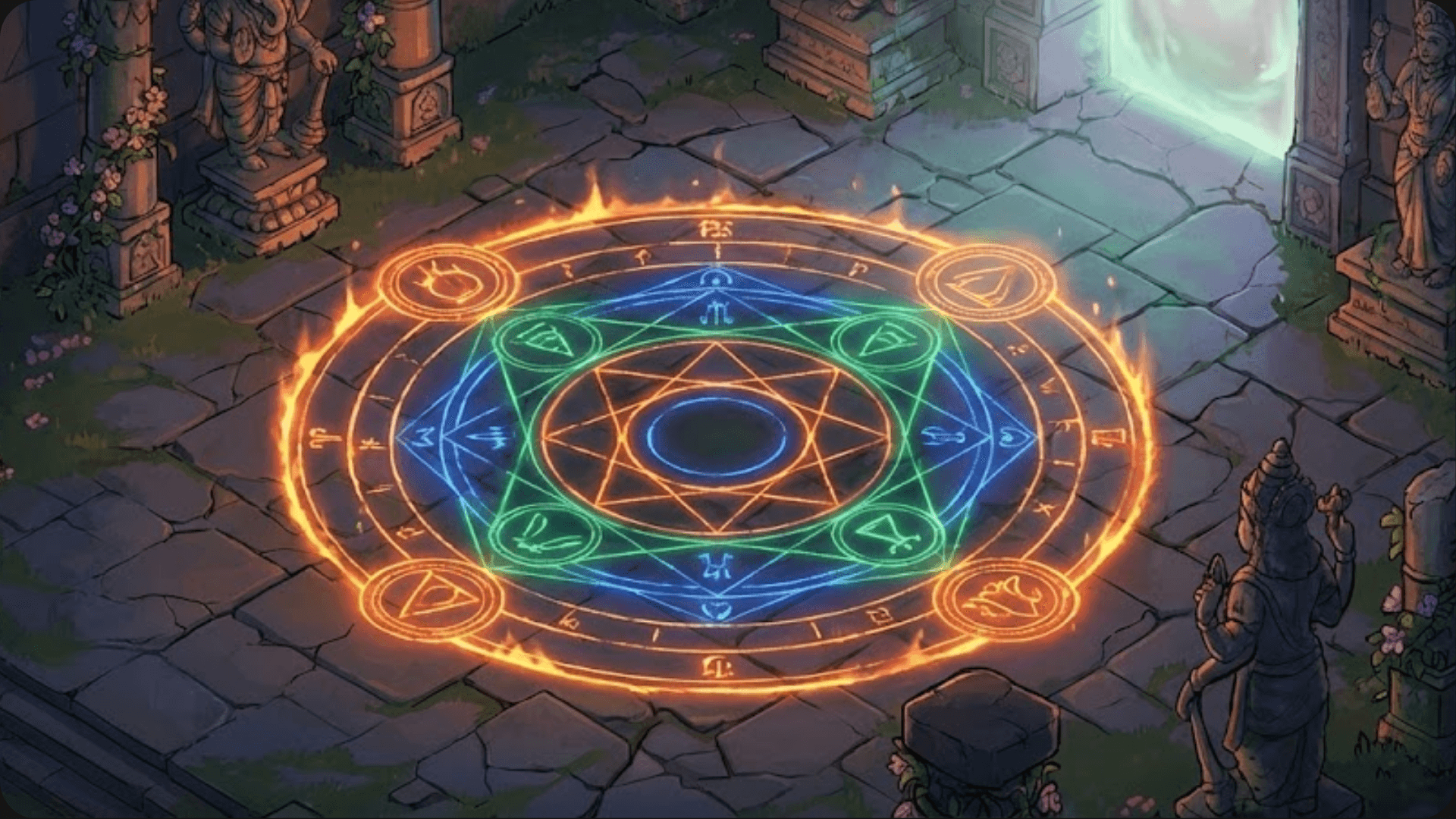
  • Solution: The Kalpa Tree acts as an active, universal defense system (e.g., automated arrows) that works alongside any roster.

  • Impact: Eliminates UI clutter. It creates a macro-level choice: players must decide whether to spend resources upgrading individual heroes or funding the global defense.

2. Horizontal Progression (Balancing Combat Friction)

  • Problem: Vertical power creep (just inflating damage numbers) eventually breaks mid-game difficulty curves.

  • Solution: Tree upgrades change how players manage the board. Investing in fire-rate counters swarms, while elemental arrows cover specific roster weaknesses.

  • Impact: Deepens the meta, opens up new playstyles, and extends the game's lifespan without endless stat inflation.

3. Deterministic Economy (Driving D7 Retention)

  • Problem: Pure RNG (gacha) progression frustrates mid-core players, causing massive Day 7 (D7) churn.

  • Solution: The Kalpa economy is deterministic. Players earn currency through strict daily "faucets" (quests) and spend it on guaranteed upgrade "sinks."

  • Impact: Eliminates RNG fatigue, validates the player's time investment, and builds the daily login habits required for long-term retention.

PROGRESSION TIMELINE & RETENTION HOOKS

  • Level 23 (The Hook): Active Board Presence Unlocked

    • Action: Player unlocks the first Base Arrow (Destruction) and the Tree becomes an active defensive weapon.

    • Impact: Validates the struggle against the Level 22 difficulty spike by rewarding the player with an immediate, visible power jump.

  • Level 32 (The Pinch): Branching Paths & Economic Friction

    • Action: Secondary elemental branches unlock, but upgrade costs begin to scale aggressively.

    • Impact: The "pinch" begins. Players must actively engage with daily tasks to afford escalating costs, cementing their core loop habits.

  • Level 50 (The Meta): Full System Synchronization

    • Action: High-tier automated defense and massive cooldown reductions are unlocked.

    • Impact: Players must now master combining specific Tree utilities with their hero loadouts to compete on Endless Mode leaderboards.

ECONOMY INTEGRATION (FAUCETS & SINKS)

  • Faucets (Deterministic Inflow): Daily Quests, Boss Milestones, and Endless Mode thresholds provide guaranteed Kalpa drops. Goal: Drive daily login habits and boost D7+ retention without relying on RNG.

  • Sinks (Escalating Outflow): Upgrading Kalpa Tree nodes serves as the primary, persistent currency sink. Goal: Exponentially scaling upgrade costs create a predictable, months-long chase that drains excess currency from the mid-to-late game economy.


PROPOSED TUNING: ARROW POWER CURVE


SYSTEM SYNERGIES

  • With Existing Boons:

    • Prosperity Boons (+Soma) allow players to deploy heroes faster, synergizing with the Tree's crowd-control (Preservation).

    • Divine Arrow Boons (+Damage) stack directly with the Kalpa Tree's Destruction upgrades.

  • With Hero Relics:

    • Individual hero relics remain focused on per-hero stat customization (Local Progression).

    • The Kalpa Tree provides the overarching battlefield defense (Global Progression). Both systems coexist seamlessly without UI competition or cognitive overload.

  • With the Hero Roster:

    • The Kalpa Tree benefits the player regardless of their current hero meta or gacha luck.

    • Encourages roster experimentation, as players can tune the Tree to cover specific team weaknesses (e.g., investing in Preservation/Slow arrows to buy time for slow, heavy-hitting heroes).

DESIGN PILLARS & BUSINESS IMPACT

  • Combats Mid-Game Churn: Replaces unimpactful, flat stat-bumps with highly visible, active board mechanics that fundamentally evolve how players engage with the game.

  • Revitalizes Dead Content (The Faucet): Transforms previously cleared 3-star levels into daily engagement loops through deterministic currency farming, directly driving D7 and D30 retention.

  • Smooths Difficulty Spikes: Provides an immediate, automated defensive boost right after early-game progress blockers (like Level 22), validating player effort and preventing frustration-based churn.

  • Deepens Meta Strategy (The Sink): Replaces static loadouts with strict economic choices. Players must actively decide between investing their limited currency into boss-melting %-HP damage or rapid-fire crowd control.

  • Respects Mobile UX & Cognitive Load: Consolidates 20+ granular hero-gear interactions into a single, centralized global upgrade tree. It eliminates menu fatigue and strictly respects mobile screen real estate.

PRODUCTION & LIVEOPS VIABILITY

  • Zero 3D Tech Debt: Relies entirely on 2D UI elements and existing projectile logic, requiring absolutely no new 3D character rigs or complex animations.

  • LiveOps Ready (Infinite Scalability): The modular nature of a "Tree" allows for rapid seasonal updates. Future LiveOps events can simply introduce temporary "corrupted branches" to act as massive currency sinks for veteran players.

  • Resource Efficient: Delivers maximum mechanical and economic impact without bottlenecking the art department.

  • Global Thematic Integration: Translates the IP's cultural authenticity into universally understood gameplay mechanics (e.g., fire burns, water slows) for a broad global audience.

Thanks for visiting!

MY SOCIALS

icon

Let's discuss the next ambitious thing

Thanks for visiting!

MY SOCIALS

icon

Let's discuss the next ambitious thing

Thanks for visiting!

MY SOCIALS

icon

Let's discuss the next ambitious thing

Create a free website with Framer, the website builder loved by startups, designers and agencies.