Project details

Case Study: Designing India’s First Esports Infrastructure Ecosystem

Overview

Esports in India is booming, but the ecosystem remains fragmented, publisher-dependent, and poorly monetized. My project explores how a structured, publisher-independent esports ecosystem can be designed to foster competitive integrity, sustainable growth, and global recognition.

Role: Concept Designer (Service & Product Design)
Timeline: 2 weeks (research, analysis, and conceptualization)
Methods Used: Market Research, Service Blueprinting, Competitive Analysis, Ecosystem Mapping
Problem Space

Despite rapid growth in audience and participation, India lacks a structured professional esports ecosystem. Challenges include:

  • No national pro league.

  • Weak monetization (over-reliance on sponsorships).

  • Fragmented tournament structure with limited infrastructure.

  • Heavy dependence on publishers and IP holders.

This results in missed opportunities for players, organizers, and brands.
Problem Space

Despite rapid growth in audience and participation, India lacks a structured professional esports ecosystem. Challenges include:

  • No national pro league.

  • Weak monetization (over-reliance on sponsorships).

  • Fragmented tournament structure with limited infrastructure.

  • Heavy dependence on publishers and IP holders.

This results in missed opportunities for players, organizers, and brands.

Problem Space

Despite rapid growth in audience and participation, India lacks a structured professional esports ecosystem. Challenges include:

  • No national pro league.

  • Weak monetization (over-reliance on sponsorships).

  • Fragmented tournament structure with limited infrastructure.

  • Heavy dependence on publishers and IP holders.

This results in missed opportunities for players, organizers, and brands.

Research & Insights

Market Growth

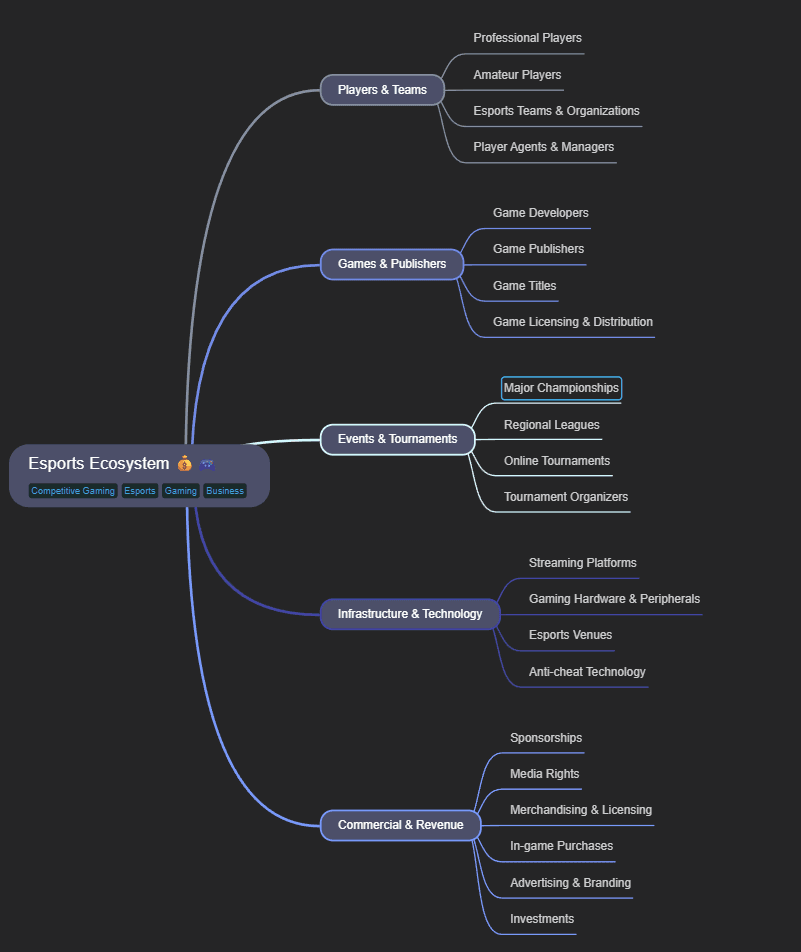
  • Indian esports audience projected to hit 85M by 2025, contributing ~10% of global viewership.

  • Prize pools expected to cross ₹100 crore (~US$13.5M) by 2025.

  • 1.5M players and 100,000+ teams are already active in competitive circuits.

Global Benchmarking

  • South Korea’s LCK (LoL): 1M+ peak viewers.

  • Valorant Champions Tour Masters: 1.3M peak viewers.

  • Esports World Cup 2025: US$71.5M prize pool.

Takeaway: India has the demand but lacks the ecosystem maturity seen in global markets.
Research & Insights

Market Growth

  • Indian esports audience projected to hit 85M by 2025, contributing ~10% of global viewership.

  • Prize pools expected to cross ₹100 crore (~US$13.5M) by 2025.

  • 1.5M players and 100,000+ teams are already active in competitive circuits.

Global Benchmarking

  • South Korea’s LCK (LoL): 1M+ peak viewers.

  • Valorant Champions Tour Masters: 1.3M peak viewers.

  • Esports World Cup 2025: US$71.5M prize pool.

Takeaway: India has the demand but lacks the ecosystem maturity seen in global markets.

Research & Insights

Market Growth

  • Indian esports audience projected to hit 85M by 2025, contributing ~10% of global viewership.

  • Prize pools expected to cross ₹100 crore (~US$13.5M) by 2025.

  • 1.5M players and 100,000+ teams are already active in competitive circuits.

Global Benchmarking

  • South Korea’s LCK (LoL): 1M+ peak viewers.

  • Valorant Champions Tour Masters: 1.3M peak viewers.

  • Esports World Cup 2025: US$71.5M prize pool.

Takeaway: India has the demand but lacks the ecosystem maturity seen in global markets.

User Needs

Players

  • Transparent league structures.

  • Opportunities beyond single-title tournaments.

  • Sustainable career pathways.

Organizers

  • Reliable infrastructure (arenas, production, streaming).

  • Reduced dependency on publishers.

  • Scalable, repeatable tournament frameworks.

Fans & Brands

  • Engaging viewing experiences.

  • Merchandise and collectibles.

  • Trusted platforms for sponsorships.

User Needs

Players

  • Transparent league structures.

  • Opportunities beyond single-title tournaments.

  • Sustainable career pathways.

Organizers

  • Reliable infrastructure (arenas, production, streaming).

  • Reduced dependency on publishers.

  • Scalable, repeatable tournament frameworks.

Fans & Brands

  • Engaging viewing experiences.

  • Merchandise and collectibles.

  • Trusted platforms for sponsorships.

User Needs

Players

  • Transparent league structures.

  • Opportunities beyond single-title tournaments.

  • Sustainable career pathways.

Organizers

  • Reliable infrastructure (arenas, production, streaming).

  • Reduced dependency on publishers.

  • Scalable, repeatable tournament frameworks.

Fans & Brands

  • Engaging viewing experiences.

  • Merchandise and collectibles.

  • Trusted platforms for sponsorships.

Process

Step 1: Competitive Analysis

Compared existing players: Nodwin Gaming, Skyesports, S8UL, Global Esports.

  • Strengths: grassroots engagement, publisher ties.

  • Weaknesses: fragmented IP, sponsor dependency.

  • Gap: No flagship national pro league.

Step 2: Service Blueprinting

Mapped stakeholder journeys:

  • Frontstage: players register, compete, stream, engage fans.

  • Backstage: publishers, production, sponsorships, event management.

  • Identified choke points → weak monetization, inconsistent league formats.

Step 3: Ecosystem Design

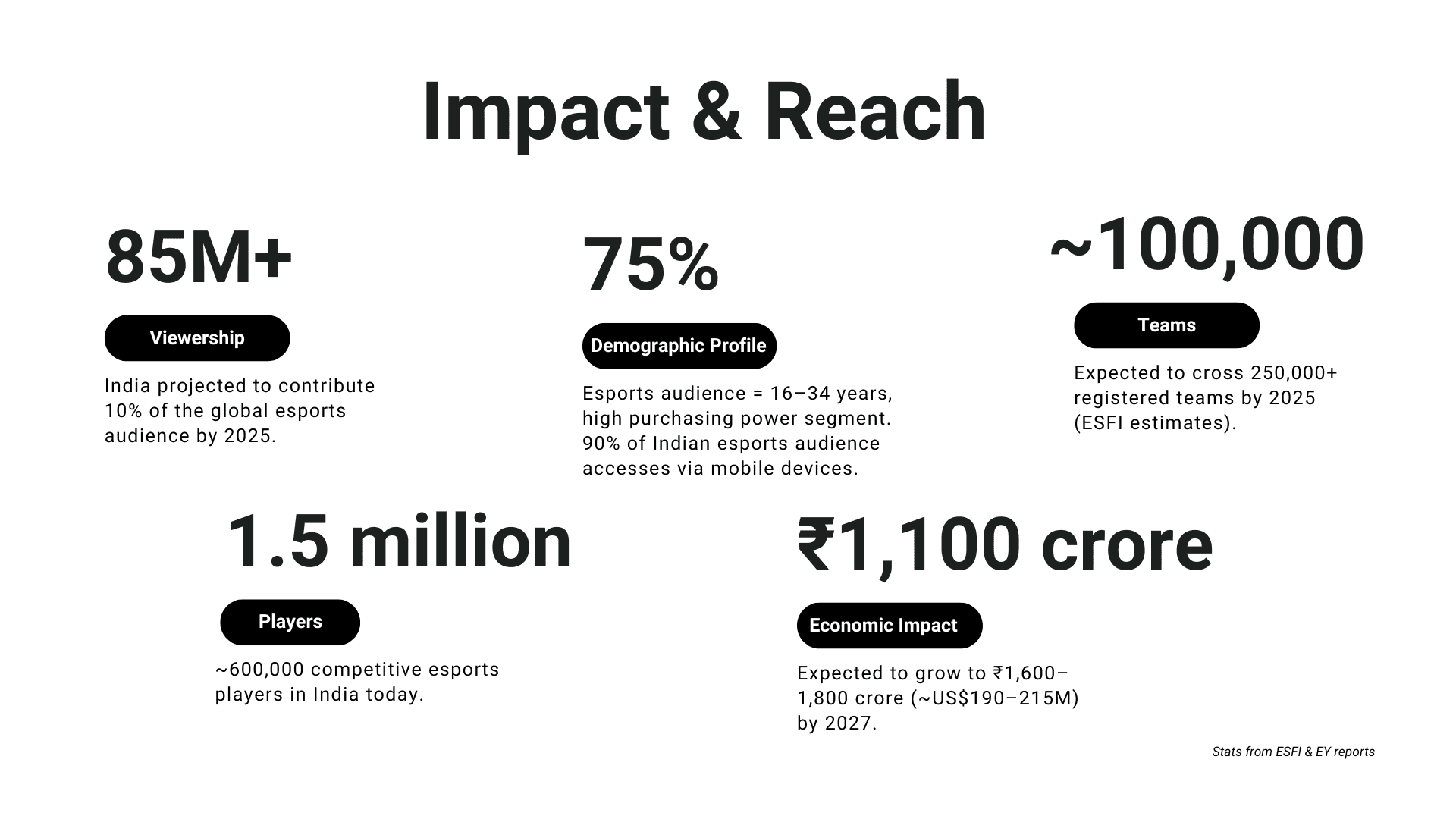
Defined a multi-layer platform model:

  1. Tournament Platform: National and regional leagues, scalable internationally.

  2. Content & Streaming: Esports-first OTT / creator-first streaming ecosystem.

  3. Infrastructure Services: White-label SaaS for universities, corporates, and regional organizers.

  4. Monetization: Sponsorships, brand partnerships, merchandising, premium passes.
Process

Step 1: Competitive Analysis

Compared existing players: Nodwin Gaming, Skyesports, S8UL, Global Esports.

  • Strengths: grassroots engagement, publisher ties.

  • Weaknesses: fragmented IP, sponsor dependency.

  • Gap: No flagship national pro league.

Step 2: Service Blueprinting

Mapped stakeholder journeys:

  • Frontstage: players register, compete, stream, engage fans.

  • Backstage: publishers, production, sponsorships, event management.

  • Identified choke points → weak monetization, inconsistent league formats.

Step 3: Ecosystem Design

Defined a multi-layer platform model:

  1. Tournament Platform: National and regional leagues, scalable internationally.

  2. Content & Streaming: Esports-first OTT / creator-first streaming ecosystem.

  3. Infrastructure Services: White-label SaaS for universities, corporates, and regional organizers.

  4. Monetization: Sponsorships, brand partnerships, merchandising, premium passes.

Process

Step 1: Competitive Analysis

Compared existing players: Nodwin Gaming, Skyesports, S8UL, Global Esports.

  • Strengths: grassroots engagement, publisher ties.

  • Weaknesses: fragmented IP, sponsor dependency.

  • Gap: No flagship national pro league.

Step 2: Service Blueprinting

Mapped stakeholder journeys:

  • Frontstage: players register, compete, stream, engage fans.

  • Backstage: publishers, production, sponsorships, event management.

  • Identified choke points → weak monetization, inconsistent league formats.

Step 3: Ecosystem Design

Defined a multi-layer platform model:

  1. Tournament Platform: National and regional leagues, scalable internationally.

  2. Content & Streaming: Esports-first OTT / creator-first streaming ecosystem.

  3. Infrastructure Services: White-label SaaS for universities, corporates, and regional organizers.

  4. Monetization: Sponsorships, brand partnerships, merchandising, premium passes.

Vision

India’s first structured, publisher-independent professional esports ecosystem.

Key Components

  • Flagship National League (multi-title, pro-level competition).

  • Esports Arenas & Studios (metro-based, scalable to international).

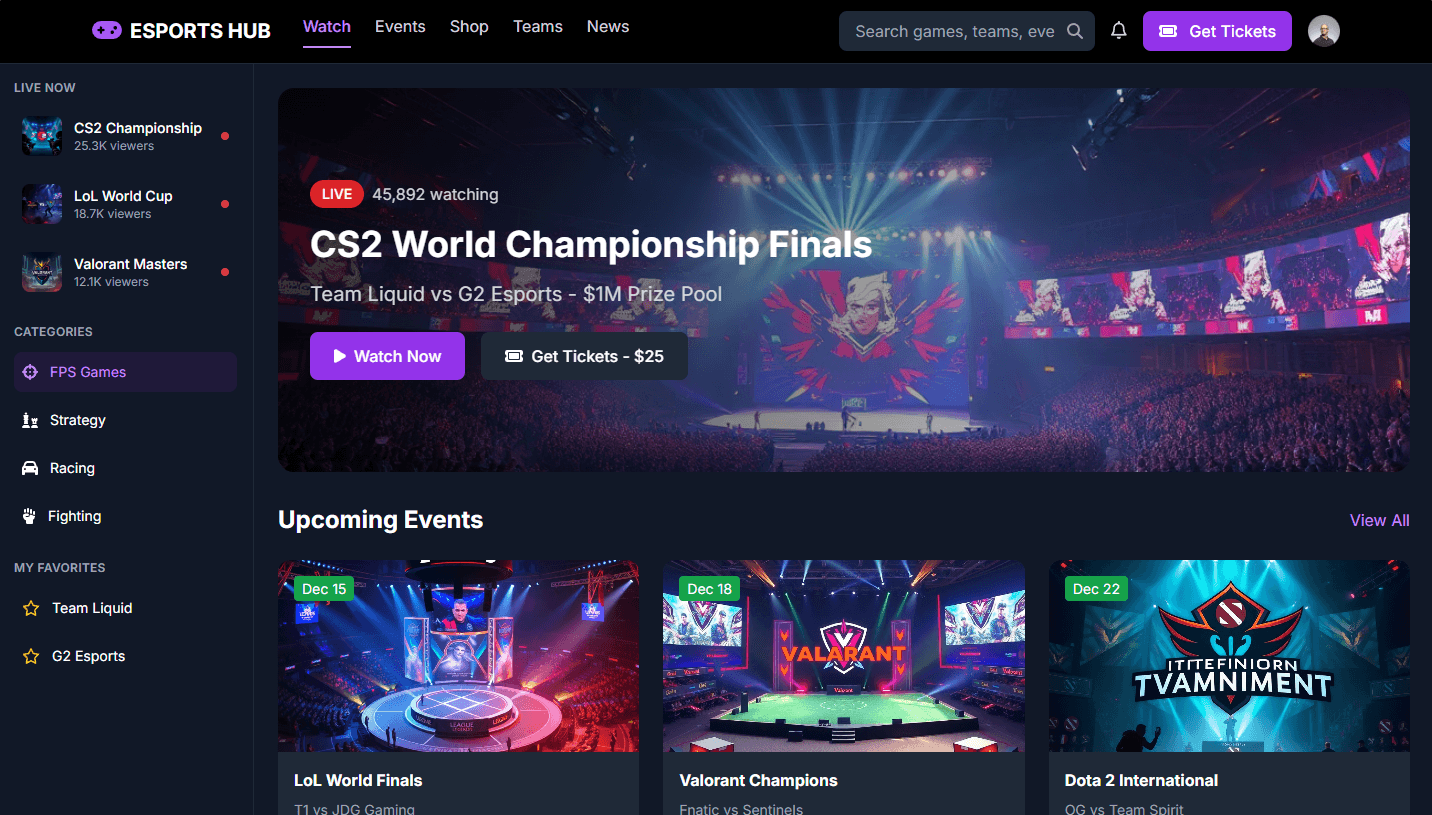
  • Streaming & Content Platforms (dedicated esports OTT).

  • Merchandising & Collectibles (non-tokenized digital + physical).

  • White-label Services (cloud-based tournament tech for B2B).

Impact & Outcomes

  • Audience Reach: 85M+ viewers by 2025.

  • Player Ecosystem: 1.5M competitive players, 250K+ teams.

  • Economic Impact: ₹1,600–1,800 crore (~US$190–215M) contribution by 2027.

  • Brand Opportunities: Sponsorships, OTT deals, merchandise, SaaS offerings.
Vision

India’s first structured, publisher-independent professional esports ecosystem.

Key Components

  • Flagship National League (multi-title, pro-level competition).

  • Esports Arenas & Studios (metro-based, scalable to international).

  • Streaming & Content Platforms (dedicated esports OTT).

  • Merchandising & Collectibles (non-tokenized digital + physical).

  • White-label Services (cloud-based tournament tech for B2B).

Impact & Outcomes

  • Audience Reach: 85M+ viewers by 2025.

  • Player Ecosystem: 1.5M competitive players, 250K+ teams.

  • Economic Impact: ₹1,600–1,800 crore (~US$190–215M) contribution by 2027.

  • Brand Opportunities: Sponsorships, OTT deals, merchandise, SaaS offerings.

Vision

India’s first structured, publisher-independent professional esports ecosystem.

Key Components

  • Flagship National League (multi-title, pro-level competition).

  • Esports Arenas & Studios (metro-based, scalable to international).

  • Streaming & Content Platforms (dedicated esports OTT).

  • Merchandising & Collectibles (non-tokenized digital + physical).

  • White-label Services (cloud-based tournament tech for B2B).

Impact & Outcomes

  • Audience Reach: 85M+ viewers by 2025.

  • Player Ecosystem: 1.5M competitive players, 250K+ teams.

  • Economic Impact: ₹1,600–1,800 crore (~US$190–215M) contribution by 2027.

  • Brand Opportunities: Sponsorships, OTT deals, merchandise, SaaS offerings.

Reflection

This project helped me practice service design at scale, applying UX principles not just to a product interface but to a multi-stakeholder ecosystem.

Key Learnings:

  • Designing at a systems level requires balancing player needs, organizer logistics, and sponsor monetization.

  • Transparency and structure are critical drivers of trust in esports.

  • A product isn’t just an app—it can be an ecosystem with players, fans, brands, and tech infrastructure all woven together.

If implemented, this ecosystem could position India as a global esports hub with sustainable growth for players, teams, and organizers.

Reflection

This project helped me practice service design at scale, applying UX principles not just to a product interface but to a multi-stakeholder ecosystem.

Key Learnings:

  • Designing at a systems level requires balancing player needs, organizer logistics, and sponsor monetization.

  • Transparency and structure are critical drivers of trust in esports.

  • A product isn’t just an app—it can be an ecosystem with players, fans, brands, and tech infrastructure all woven together.

If implemented, this ecosystem could position India as a global esports hub with sustainable growth for players, teams, and organizers.

Reflection

This project helped me practice service design at scale, applying UX principles not just to a product interface but to a multi-stakeholder ecosystem.

Key Learnings:

  • Designing at a systems level requires balancing player needs, organizer logistics, and sponsor monetization.

  • Transparency and structure are critical drivers of trust in esports.

  • A product isn’t just an app—it can be an ecosystem with players, fans, brands, and tech infrastructure all woven together.

If implemented, this ecosystem could position India as a global esports hub with sustainable growth for players, teams, and organizers.

Thanks for visiting!

MY SOCIALS

icon

Let's discuss the next ambitious thing

Thanks for visiting!

MY SOCIALS

icon

Let's discuss the next ambitious thing

Thanks for visiting!

MY SOCIALS

icon

Let's discuss the next ambitious thing

Create a free website with Framer, the website builder loved by startups, designers and agencies.